What is SPF and
how often should you apply it?
Sun protection is essential for helping you maintain healthy-looking skin and preventing long-term damage. Prolonged exposure to the sun can cause sunburn, premature ageing and increase the risk of skin damage. Sunscreen plays a crucial role in shielding your skin from harmful UV radiation, and understanding what SPF is can really help you choose the right protection.
What does
SPF stand for?

The SPF on sunscreen stands for Sun Protection Factor – if you have ever wondered “what does SPF stand for” or “what does SPF mean”, this is the answer. It's a relative measurement for the amount of time the sunscreen will protect your skin from ultraviolet (UV) rays. The higher the SPF number, the higher the percentage of UVB rays it will block.
In practice, however, it's a different story, as the duration of a sun cream's effectiveness can depend on a number of factors, such as the quantity applied, the UV index and whether your skin is sweating or swimming. The SPF value should therefore be seen more as a guide, and reapplied regularly, especially if you're wondering what the factor on sunscreen really means for you in everyday life.
The difference between
SPF levels

- SPF 15 blocks approximately 93% of UVB rays
- SPF 30 blocks about 97% of UVB rays
- SPF 50 blocks approximately 98% of UVB rays
SPF is determined by measuring the time it takes for redness (erythema) to appear on unprotected skin exposed to a specific dose of UV rays, compared with unprotected skin. So, in theory, an SPF 30 sun cream would last 30 times longer than the same exposure without protection. In practice, however, it's a different story, as the duration of a sun cream's effectiveness can depend on a number of factors, such as the quantity applied, the UV index and whether your skin is sweating or swimming. The SPF value should therefore be seen more as a guide, and reapplied regularly, especially when you're choosing between sunscreen SPF 50 vs 30 and want to know what the SPF number means for real-life use.
How to apply
SPF correctly

Sunscreen should be applied generously to all uncovered areas. The amount of SPF needed varies by age:
- Under 3 years: Avoid exposing babies and young children to the sun at all costs by keeping them in the shade and using protective clothing, a hat, sunglasses and a parasol, as their skin is extremely delicate and more vulnerable to UV damage. For uncovered areas subject to indirect exposure, use a minimum of 5 to 10 ml for babies aged 6 months and over.
- Children (3–5 years): At least 10–15 ml. For more information on choosing the right sun protection for children, check NIVEA's sunscreen guide for children.
- Children (5–10 years): Require at least 15–20 ml for full coverage.
- Adults and children over 10: Need at least 30–40 ml for the whole body.
How long does SPF 50 last and
how often should you reapply sunscreen?
Regardless of the SPF level you use, to maintain optimal protection, sunscreen should be reapplied every two hours. If you are swimming, sweating or towel-drying, it will wear off more quickly, requiring more frequent reapplication. Always check the sunscreen's water-resistant label for specific guidance on reapplication during water activities. Regular reapplication ensures continuous protection throughout the day.
What is SPF and
how often should you apply it
Application:
Sunscreen should be reapplied every two hours or more frequently if you are swimming or sweating.
What is SPF:
SPF stands for Sun Protection Factor, indicating the level of protection sunscreen provides against UVB rays and helping you understand what the SPF number means on the bottle.
SPF levels:
SPF 15 blocks approximately 93% of UVB rays
SPF 30 blocks approximately 97% of UVB rays.
SPF 50 blocks approximately 98% of UVB rays.
Protection with SPF
for the face

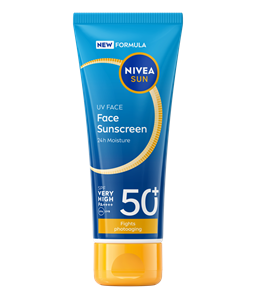
Apply sunscreen as the last step of your skincare routine and before you apply any makeup, covering your face, neck and upper torso. Using moisturisers with SPF offers a convenient way to add SPF into your routine.
Although many makeup products now contain SPF, they are generally not applied in sufficient quantities to offer adequate protection. It's therefore important to make sure you are still using a sufficient amount of sunscreen for optimal protection.
For added convenience, the NIVEA 2in1 Prime UV Serum offers instant SPF 50+ protection and smoothness in a lightweight, fragrance-free formula. Infused with Hyaluron for hydration of the upper layers of the skin and Licochalcone A to boost your skin's natural defence mechanisms (in vitro tested), this serum helps combat premature ageing caused by the sun while keeping your skin looking healthy. Absorbing quickly without greasiness, it provides seamless daily sun protection.
Designed for convenience, its premium dispenser ensures effortless application. The 2-in-1 action protects and smooths, making it perfect for busy lifestyles. It works well alone or as a primer under makeup, delivering long-lasting hydration and defence for healthy-looking, soft skin.
Protection with SPF
for the body
Choosing the
right SPF for your skin
- Fairer skin tones:For fair skin tones, an SPF 50+ is recommended, as fair skin has lower melanin levels and is more prone to burning and skin damage.
- Darker skin tones:For darker skin tones, an SPF 30+ is usually sufficient, as melanin offers some natural UV defence. However, this does not eliminate the risk of sunburn, hyperpigmentation or skin damage, so daily SPF application remains essential. In some cases, an SPF 50 may be recommended, particularly to protect the face in the event of high exposure or hyperpigmentation.
- Oily skin:For oily skin, it is recommended to use a lightweight, mattifying sunscreen that will not clog pores or feel greasy. Sun protection products in fluid or gel form generally give a less oily effect than creams. Look for products with an ultra-light texture and ingredients such as Niacinamide to absorb excess sebum and help prevent imperfections.
- Sensitive skin:For sensitive skin, choose sun creams specially formulated for this skin type and which have been dermatologically tested. Fragrance-free, ethyl alcohol-free and “for sensitive skin” options help minimise the risk of redness appearing and discomfort.
- Dry skin:Dry skin benefits from hydrating sunscreens enriched with ingredients like Hyaluronic Acid, Glycerine or Ceramides to lock in moisture while providing UV protection. Many SPF-infused moisturisers offer both sun protection and hydration, helping prevent dryness and flaking caused by prolonged sun exposure.

What's the difference?
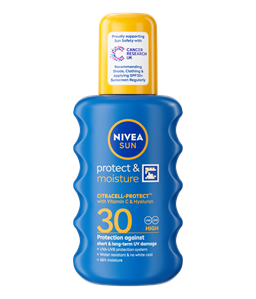
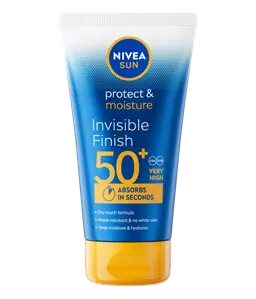
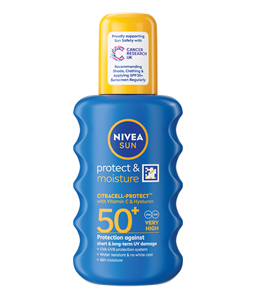
Protection levels above SPF 50 only offer marginal additional coverage, and no level of SPF can provide 100% protection. In most situations, SPF 30 is adequate protection if applied correctly and regularly; however, SPF 50 remains the safer option for fair skin or heavy exposure. If you are curious about the difference between SPF 30 and 50 and want trusted sun protection, try our NIVEA Sun Protect & Moisture SPF 50 Lotion.
With a water-resistant formula, this sunscreen is ideal for outdoor activities (don't forget to reapply regularly, especially after swimming or sweating). It keeps your skin feeling soft, smooth and nourished while maintaining effective sun protection. Suitable for all skin types, its dermatologically tested formula ensures reliable care for daily use.
*Instrumental evaluation, 35 women, 2022